
Guide
Valentine's Day Promotion Ideas for Small Business: A South Jersey Planning Guide
A week-by-week plan for single-location South Jersey businesses: what to decide by 11 January, offer ideas for florists, bakeries, gift shops and spas, how to write a claimable offer, and what to do after 14 February.
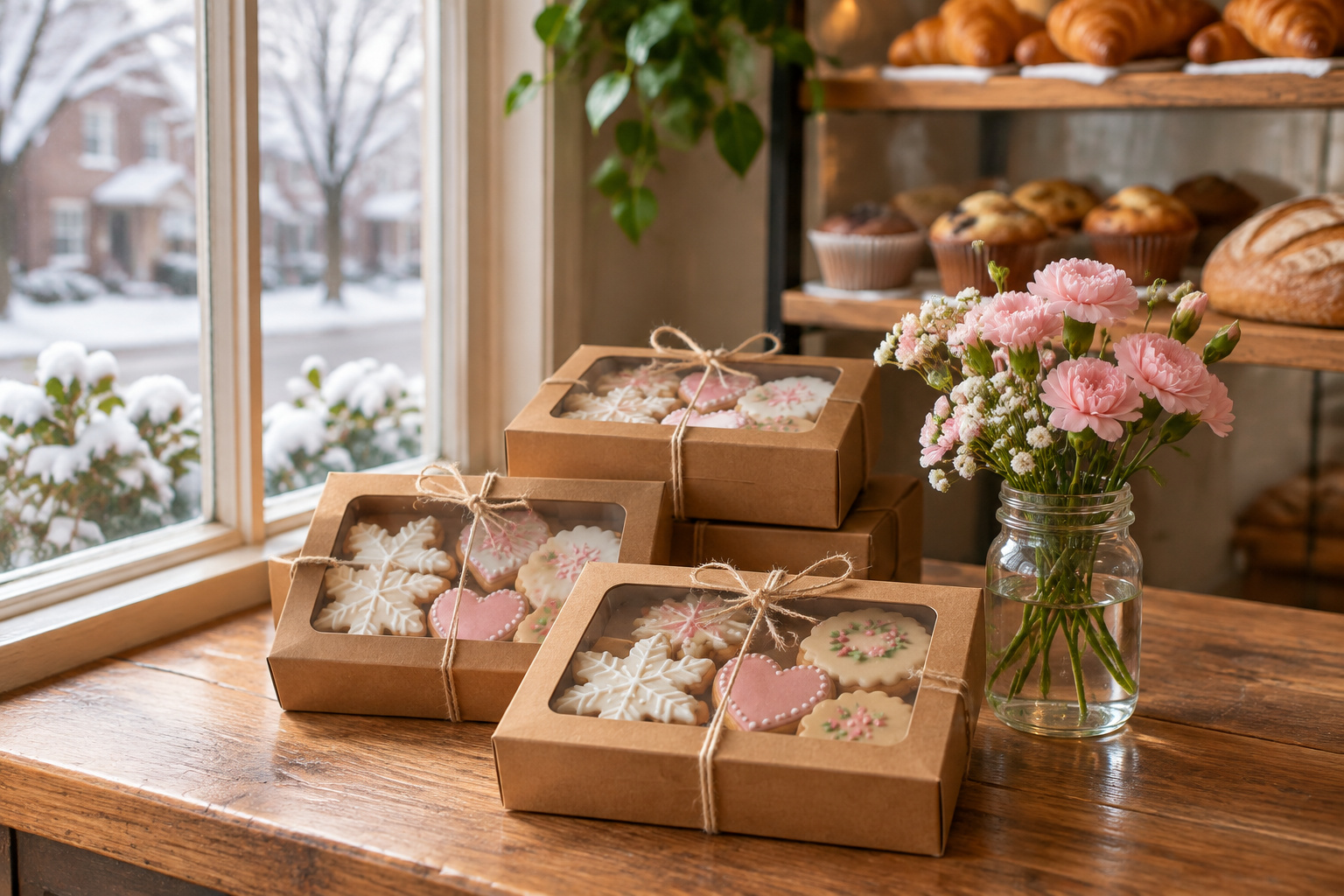
Valentine's Day promotion ideas for small business come down to three decisions: what you offer, how easy it is to claim, and when nearby people see it. For a single-location florist, gift shop, bakery, spa or class business in South Jersey, the working window runs from 28 December 2026 to Sunday 14 February 2027. You choose the offer in the first two weeks, get it in front of people by mid-January, and keep it visible for about four weeks, because a lot of the buying happens in the final days. This guide walks through that calendar, offer formats for each type of business, a plain comparison of local advertising options, and what to do after 14 February. Every idea here is drink-free, and none comes with a promise about sales, because nobody can honestly make one. Start with the numbers.
What the numbers say about Valentine's Day shoppers
The most useful national data comes from the National Retail Federation (NRF), which has surveyed Valentine's Day plans every year for well over a decade. Its 2026 survey, run with Prosper Insights & Analytics, forecast a record $29.1 billion in spending. As reported by NACS, 55% of consumers planned to celebrate and budgeted a record average of $199.78 on gifts. Candy led at 56%, flowers and greeting cards each came in at 41%, and an evening out at 39%.
Two other findings matter for local businesses. First, gifting is widening: the survey found about 21% of shoppers planned to buy for coworkers and a record 35% for pets. Second, 31% of people who weren't celebrating still planned to mark the day in some way, such as self-care or time with friends. That is where Galentine's Day and "treat yourself" offers come from.
Timing is the other half. One RetailMeNot consumer survey, reported by Chain Store Age, found 32% of respondents planned to buy their gifts the week of Valentine's Day itself. That is one survey, not a law, but it matches what most shop owners see: plenty of people decide late.
Put those together and the plan is simple. You decide early, because your suppliers, staff and artwork all need lead time. Then you run the offer for about four weeks and push hardest in the last one. These are national figures, not South Jersey figures, so treat them as a guide to the shape of demand. NRF's Valentine's Day Data Center has the category-by-category detail, and a new survey usually appears each winter, so check for updated numbers before you finalise anything.
Your Valentine's Day marketing timeline: what to decide by 11 January
Most competing guides hand you a list of 20 ideas and stop there. A single-location shop needs an order of operations. Count back from 14 February and the schedule below falls out. In 2027, 14 February is a Sunday and 13 February is a Saturday, so check your opening hours for that weekend now, not in February.
28 December to 11 January: make the decisions
These are the choices that can't wait past Monday 11 January, because everything downstream depends on them:
- The offer. One main offer, plus at most one backup. Two offers dilute each other on a coaster, a flyer or a shelf card.
- Your cost limit. Work out what the offer costs you per redemption in product and margin, then decide how many you can afford to honour. A cap is normal and fair if you state it.
- The expiry date. Usually 14 February, or Saturday 13 February if you're closed Sunday.
- How it's redeemed. At the counter, by booking, or by pre-order pickup.
- Where it appears. Pick one or two channels, not five (see the comparison below).
- Stock and staffing. Order flowers, boxes, ribbon and ingredients, and book extra hours, before suppliers hit their own February crunch.
Week by week from 11 January to 14 February
- 11 to 17 January: Finalise wording and artwork, submit it to wherever it will appear, brief your staff on how to handle it, and confirm any partner business. If in-venue placement is part of your plan, this is the week to look at which South Jersey venues have places open.
- 18 to 24 January: The offer goes live. For us, mid-January is when offers can be on tables, which gives roughly four weeks before 14 February.
- 25 to 31 January: Check that staff are handling the offer the same way every time, and top up stock. Start taking pre-orders.
- 1 to 7 February: Push Galentine's and group offers, plus coworker and office orders. These need the most notice.
- 8 to 14 February: The final-week push. Short messages, clear cut-off times, ready-to-go products.
- 15 February onward: Count what happened, write it down, and switch to your late-winter plan.
Valentine's Day offer ideas for florists, gift shops and bakeries
These three types of shop sell what NRF's survey shows people buying, so the question is less "what do we sell" and more "what makes someone choose us this week". The offers that work best at a counter are simple enough to explain in one sentence and cheap for you to deliver. Add-ons usually protect your margin better than percentage discounts. Taking $5 off a $40 order gives away 12.5% of the sale, while a free card or ribbon costs you pennies and still feels like a gift.
Florists
If you're searching for Valentine's Day marketing ideas for florists, start with add-ons and pre-orders rather than price cuts. Flowers carry high input costs in February, so discounting is the hardest route.
- A free bud vase or hand-written card with any bouquet over a set amount.
- A small "for the table" bunch priced for people who want something modest.
- Pre-order for Saturday pickup, with a collection window, so you aren't building 40 bouquets at once on the day.
- A second small posy at a reduced price for a friend or coworker, which also feeds Galentine's and office orders.
Gift shops
For a Valentine's Day gift shop promotion, the problem to solve is decision fatigue. Shoppers who wait until the last week want something wrapped and ready.
- Free gift wrap and a card with a purchase over a set amount.
- A "gifts under $25" and "gifts under $50" shelf or table, and a matching offer.
- A pre-built "gift for two" bundle (a candle, a card, a small treat) at one clear price.
- A free small item, such as a keyring or sticker sheet, with a second purchase.
Bakeries
For bakery Valentine's Day marketing ideas, the strongest levers are boxes, pre-orders and personal touches.
- A box for two: two cookies or pastries, wrapped, at a single price.
- A free piped message on any pre-ordered cake.
- A free cookie when someone claims the offer and buys a dozen.
- Pre-order pickup slots for decorated cakes, with a firm last-order date.
Whichever you pick, put a limit on it and write it down. "First 50 claims" or "while stock lasts" is acceptable when it's plainly stated. A vague limit is what causes awkward moments at the counter.
Evening-out offers without the bar tab: spas, salons, classes and experiences
NRF's survey put "an evening out" at 39% of planned gifts and $6.3 billion in forecast spending, which is bigger than flowers by dollars. A lot of that goes to dinner, but couples and friends also look for something to do that doesn't revolve around a drink. That is the opening for spas, salons, studios and experience businesses, and the offers below are all drink-free.
If you're searching for Valentine's Day spa promotion ideas, think in terms of "for two", "for a friend" and "for later":
- Bring-a-guest pricing. A second person's class, session or add-on at a reduced rate when booked together. This suits pottery, painting, cooking and dance classes, escape rooms, mini golf and bowling.
- Express treatments. A short facial, manicure or blowout for two, sized to fit before a dinner reservation, so you can run more slots in an evening.
- Bonus gift cards. Buy a $50 card, get a $10 bonus card valid from 15 February to a set date in March. The giver gets a bigger present, and your slow weeks after Valentine's get bookings. Put the bonus card's start and end dates in writing.
- "Date night in a box." Studios can sell a take-home kit, such as clay, paint or ingredients, for people who prefer a night at home.
- Self-care singles offer. A solo-friendly price, since some of those 31% non-celebrators still plan to mark the day.
For service businesses, capacity is the whole game. Count the chairs, rooms or class places you can fill on Friday 12, Saturday 13 and Sunday 14 February, and offer no more than that. Use booking as the redemption step: the offer is claimed in advance, and the guest shows it when they arrive, so you aren't turning people away.
How to write a Valentine's offer people can claim and redeem easily
A good offer is short, specific and has no surprises. Competing guides tell you what to offer, but rarely cover the part where a guest holds up a phone at your counter and someone has to decide whether it's valid. Settle that in advance.
Every offer should answer six questions in plain words:
- What do they get? One benefit, named exactly. "A free box of two cookies with any dozen" beats "a Valentine's treat".
- What do they have to do? Any minimum spend or booking requirement.
- When does it end? A calendar date, not "this week".
- How many? One per guest, and whether it can be combined with other offers.
- Where and how is it redeemed? In store, by appointment, or by pre-order.
- What's excluded? Custom orders, holiday-hours restrictions, anything that makes the offer less than it sounds.
Here is an example for a bakery: "Claim this offer and show it at the counter by 13 February 2027 for a free box of two cookies with any dozen. One per guest. Not valid on custom orders or with other offers." It runs to a single short paragraph and leaves nothing to argue about.
On the staff side, a counter check should take about ten seconds. We suggest a shared checklist: look at the claimed offer on the guest's phone, check the expiry date, confirm any minimum was met, apply it once, and move on. Write down what staff may do if something goes wrong, such as a guest who forgot to claim in advance, so nobody has to improvise in a queue on the 13th.
With Tappd, the guest flow is deliberately plain: a guest scans a coaster, claims your offer with their email, and redeems it with you in person. You can see the three sides of that process on how a guest claims and redeems an offer. Whatever channel you use, the same six questions apply.
Getting your offer in front of nearby people: flyers, mailers, social ads and coasters compared
Valentine's Day is a February-only campaign, so the useful question is cost and effort for one short run, not what suits a year-round plan. The comparison below is qualitative on purpose: your printing, postage and ad costs depend on quantity and area, so get your own quotes. We can't tell you what any channel will earn you.
| Option | Cost pattern | Effort | Lead time | Watch out for |
|---|---|---|---|---|
| Flyers and shelf cards | Low print cost, but your own time to distribute | Medium: someone has to hand them out or ask neighbours to display them | About a week for design and printing | Reach is limited to foot traffic you already have or places that agree to display them |
| Direct mail | Print plus postage for every household, so it rises quickly with area | Medium to high: list, design, mailing house or post office paperwork | Two to three weeks | Hard to time to the final week, and you pay for every address, nearby or not |
| Local social ads | A budget you set, with no minimum run | Medium: you build, monitor and adjust the ads yourself | Days | Targeting by radius isn't perfect, and attention is spread across a busy feed |
| Sponsorships (school, team or event) | Often a flat fee | Low once agreed | Weeks to months, tied to the other party's calendar | The calendar rarely matches 14 February |
| In-venue coasters | A set price per venue, which we publish | Low: you supply the offer and we handle the coasters | Offers can be on tables by mid-January | Reaches people who are out in a specific venue, so choose venues near your customers |
Our own option is the last row. We put local offers on QR coasters in bars and restaurants in Medford and across South Jersey, so the people who see your offer are already out and nearby, and the offer sits on the table for the length of a meal. What a place on a venue's coasters costs is on our pricing page, with the three plans. We don't offer social media management, web design or print other than coasters, so if you want ads or flyers too, you'll handle those separately.
For most single-location shops, two channels is plenty: one that reaches strangers nearby (coasters or local social ads), and one that reaches your existing customers (counter cards, a sign in the window or an email list). Spreading a small budget across five channels tends to mean none of them runs long enough to be noticed.
Galentine's Day on 13 February: a separate offer with its own timing
Galentine's Day falls on 13 February, the day before Valentine's, and in 2027 that is a Saturday. It deserves its own offer rather than a mention at the bottom of your Valentine's flyer, because the customer is different and so is the buying timeline. People planning something for a group of friends decide earlier than someone picking up a last-minute bouquet, since they have to agree a time and a place.
That has two practical effects. Your Galentine's offer should be live by early February at the latest, and it should be easy to book or pre-order. Consider these formats:
- Group bookings. A class, treatment or session priced per person for groups of three or four, with the booking deadline stated.
- Friend-pair offers. "Bring a friend, second person's add-on free" works for studios and salons.
- Treat boxes. A bakery box of four, or a "friends' box" at one price, for pickup on Friday 12 or Saturday 13 February.
- Flower sharing. A florist can sell mini bouquets in sets of three or four, wrapped and labelled for giving.
- A gift-shop bundle. A small candle, card and sweet at a single price, sized for a friend.
The NRF finding that many people who skip Valentine's Day still mark it with friends and family is why this works. You aren't selling romance. You're giving people an easy reason to do something small for each other on a Saturday.
Two shops, one offer: setting up a Valentine's cross-promotion
Valentine's Day cross promotion between local businesses is often mentioned in one line ("pair a florist with a bakery") and then dropped. Here is how to actually do it, in order.
- Pick a partner whose customers look like yours but who sells something different. A florist and a bakery, a salon and a gift shop, a studio and a coffee shop. Walking distance is ideal.
- Agree the offer in one sentence each. Keep it symmetrical: customers of Shop A get a perk at Shop B, and the other way round. For example: "Show a bakery receipt at the florist for a free card with any bouquet" and "Show a florist receipt at the bakery for a free cookie with any box."
- Decide who redeems. The simplest design is that each shop honours its own perk from its own stock, so no money changes hands between you. Each shop absorbs the cost of its own giveaway.
- If you sell a joint bundle, agree the split before you print. When one shop sells and the other supplies, split by what each side's goods cost, put it in a short written note, and settle up on a fixed date after 14 February.
- Write the terms once and use identical wording. Same expiry date, same one-per-guest rule, same exclusions, on both sides.
- Cap it. Agree a maximum, such as 40 redemptions each, so neither shop feels exposed.
- Promote it at both counters. A shelf card at each shop, plus whichever outward-facing channel you chose, each mentioning the other by name.
- Debrief together. Compare notes on 15 February: how many redeemed, what staff found confusing, and whether to repeat for Mother's Day.
One caution: a partnership only works if both sides can honour it on busy days. Talk through opening hours on 13 and 14 February before you commit.
Beyond couples: offers for coworkers, friends and pets
NRF's 2026 survey found about 21% of shoppers planned coworker gifts, worth a forecast $1.7 billion, and a record 35% planned gifts for their pets. Those are whole categories that most "romantic" promotions ignore, and they suit small shops well.
Coworkers. Office gifting is about volume and convenience. A bakery can offer a box of 12 for a team, with a pre-order deadline of Wednesday 10 February. A florist can offer desk-sized arrangements in a set of five or ten. A gift shop can offer a "under $10" table for a quick, small present. Offer a pickup window so a person can collect at lunch.
Friends. This overlaps with Galentine's, so reuse the same bundles rather than designing something new.
Pets. If you run a pet-supply shop, groomer or a bakery that makes dog treats, the opening is obvious: a small gift-wrapped bag of treats, a bandana with grooming, or a "treat for the dog, treat for you" pair at one price. Other shops can sort a pet-friendly table by the till.
These offers rarely need their own channel. A line on the same flyer, shelf card or coaster, such as "Gifts for the office and the dog, too", is often enough to make someone look twice.
The last week before 14 February
If the RetailMeNot figure holds for your customers, about one in three buyers will still be deciding in the final week. This is when your offer shifts from "plan ahead" to "ready now". A few specifics:
- Set cut-off times and say them. "Order by 2 pm for same-day pickup" removes guesswork and protects your staff.
- Have grab-and-go stock. Wrapped gifts, boxed treats and made-up bouquets at three clear price points.
- Plan for the weekend. Since 14 February is a Sunday, Friday 12 and Saturday 13 February will probably carry much of the last-minute demand. We can't tell you the split, so look at how your own last Valentine's weekend went.
- Shorten your message. One line, one date, one place. "Ready to pick up today" does more than a paragraph.
- Update your hours everywhere. Window sign, online listings, phone greeting.
- Ration the offer, not the welcome. If you hit your cap, say so plainly and point people to a non-discounted option.
An offer that's already on tables by mid-January has been in front of people for weeks by now. Your job in this week is to make the last step, walking in, effortless. Most of the important work happened in January.
How to tell whether your promotion worked
Without a plan you will end up guessing. A little bookkeeping before the campaign starts turns a hunch into a number you can use next year.
- Write down your baseline. Last February's sales for the same fortnight, and your normal weekly sales.
- Use a unique offer. If it's the only offer with that wording, every redemption belongs to that channel.
- Count at the counter. A tally sheet by the till is enough: one mark per redeemed offer, plus a note of the order value if you can.
- Ask one question. "How did you hear about us?" takes five seconds and captures people who claimed an offer and people who simply walked in.
- Add up the cost. Advertising spend, the value of what you gave away, and any extra staff hours.
- Compare. Divide your total cost by the number of redemptions to see what each redeemed offer cost you, and look at whether those customers bought more than the offer's value.
- Note outside factors. Weather, a Sunday Valentine's Day, a competing event. They muddy any comparison, so write them down.
One caution: redemptions count only people who used the offer, and they can't tell you about people who saw it and came in anyway. Treat the number as a floor, not a full picture. Put the results on a single page, with what you'd change, and file it where you'll find it in December.
After Valentine's: the late-winter lull and planning for Mother's Day
The weeks after 14 February are typically quiet for shops and services that depend on gifting. Everything you built for Valentine's can carry on, with different wording. The mechanics (a clear offer, an expiry date, one per guest, a counter check) stay the same.
Some ways to use the lull:
- Redeem the bonus cards. If you sold gift cards with a bonus that starts on 15 February, remind buyers with a short note or a counter sign.
- Launch a "welcome back" offer. A small perk for anyone who came in during the Valentine's run, valid through March.
- Run a mid-week offer. Pick your slowest day and attach an offer to that day alone.
- Fill class and appointment gaps. Promote the quietest time slots rather than the whole week.
Mother's Day falls on Sunday 9 May 2027, and the same sequence works again. Decide the offer by early to mid-March, finalise the wording and artwork by the end of March, and aim to have it in front of people by early April, about four weeks before. If you'd like something in place across the late-winter gap without a campaign budget, listing your business and one offer at no cost on a venue's deals page is a low-effort way to stay visible. Use your Valentine's one-page review to decide what to keep.
Frequently Asked Questions
What are some good Valentine's Day promotion ideas for a local business?
Start with an add-on rather than a discount, such as a free card, wrapped gift or small treat with a purchase over a set amount. Other options include pre-order pickup slots, a "for two" bundle, a bring-a-guest price for classes and spas, and a bonus gift card valid after 14 February. Choose one offer, set a cap and an expiry date, and make it easy to redeem.
When should a small business start promoting Valentine's Day?
Decide your offer between late December and about 11 January, then have it in front of customers by mid-January so it runs for roughly four weeks. Group and Galentine's offers need the most notice, so promote them by early February. Push hardest in the final week, since some surveys suggest around a third of shoppers buy in the week of the holiday.
How can a bakery or florist market Valentine's Day without discounting?
Use value that costs you little: free piped messages, hand-written cards, wrapped boxes for two or a second small posy at a modest price. Pre-orders with set pickup windows also help, because they spread your workload and let you buy stock accurately. Be clear about limits and dates so staff and customers both know exactly what the offer includes.
How much should I spend on local Valentine's Day advertising?
There's no single right figure, and no channel can promise sales. A practical approach is to work out what each redeemed offer costs you in discount and margin, then set a total spend you could absorb even if fewer people redeem than you hope. Run one or two channels for the full four weeks rather than five channels for one.
See how Tappd works for your business
If you run a florist, bakery, gift shop, spa or class business in Medford or elsewhere in South Jersey, the timeline above is tight but workable: decide by 11 January, be on tables by mid-January, and keep your offer in front of people through 14 February. We can't promise foot traffic or sales, but we can put a clear offer where nearby people are already sitting. Read how a local business reaches nearby people with an offer on coasters, look at the venues with open places, and check the pricing before you commit to anything. If you're not ready for a campaign, start with a free listing and build from there.